Developer and operations toolsStatus: Available
ARES Terminal Console
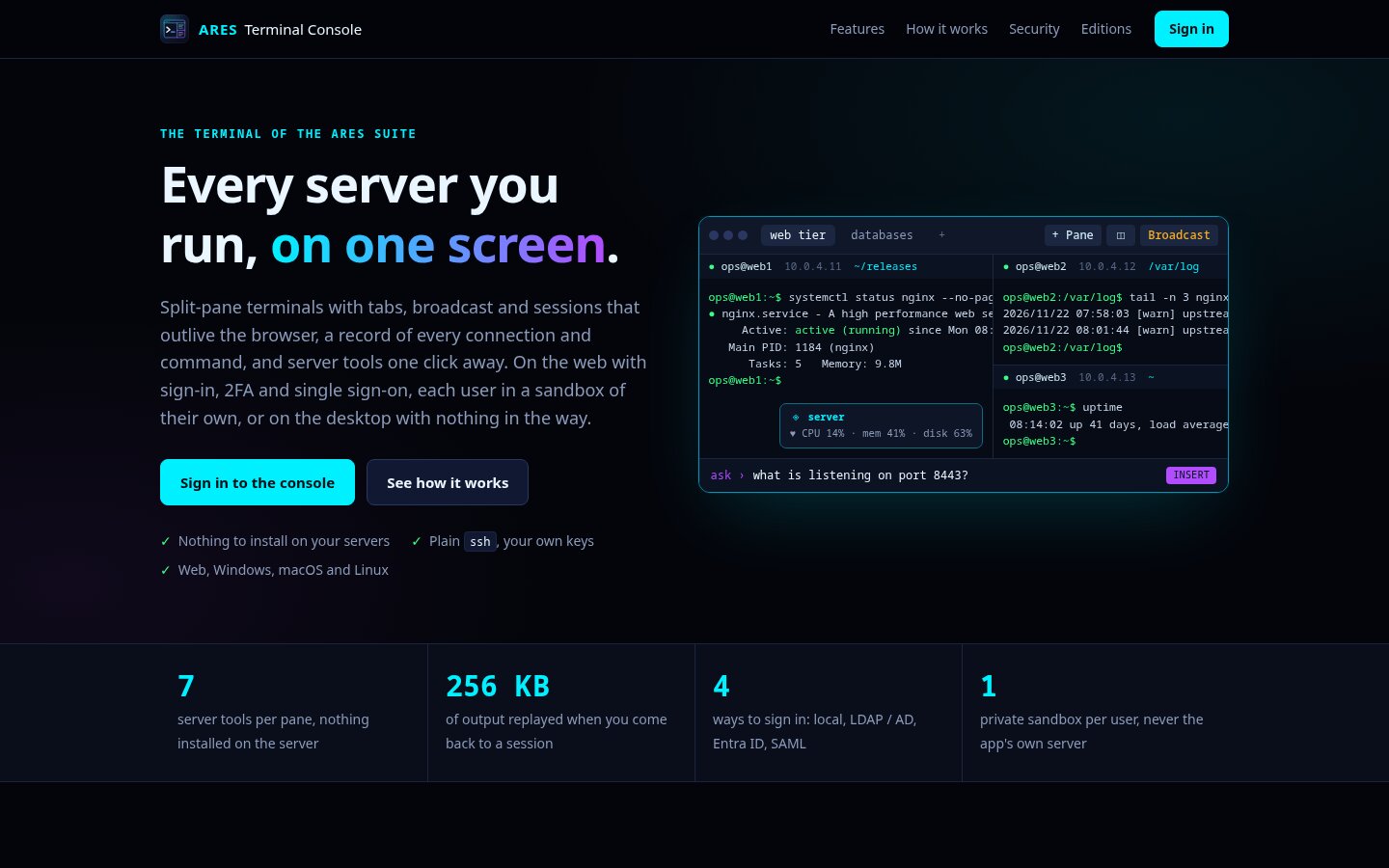
Every server you run, on one screen.
Nacino LabsDeveloper and operations tools
Let AI agents write the code. Check it before it merges.
A quality gate for code written by Claude Code, Codex and other AI coding agents. It checks every merge request for the mistakes agents typically make, verifies every new dependency, has a model from the other vendor review the change, and gives CI a clear pass or fail.
AI coding agents have gone from experiment to everyday tool. Teams let Claude Code, Codex and others write features, fix bugs and open merge requests, and the amount of code to review grows faster than the time people have to review it.
ARES Code Checker is the check that runs before a person looks. Every merge request gets the same treatment: the mistakes agents typically make, every new dependency, a review by a model from the other vendor, and your own scanners and tests. The result is a score and a clear verdict, and the merge is blocked when it should be.
Reviewers spend their time on design and intent instead of stubs and skipped tests. Security and IT get one enforced gate for every repository, on their own servers, with sign-in through their directory and an audit trail in their SIEM. And everyone can see which agent does well, and where it needs tighter instructions.
See the live demo, on made-up code, at ares-code-checker.nacino.net.
Coding agents such as Claude Code and Codex now open merge requests every day. They are fast and mostly right, and they fail in ways that are easy to predict and easy to miss on a busy day. ARES Code Checker has rules for each of them.
Stubs, "not implemented" bodies, placeholder logic and new TODOs reported as finished work.
Skipped and focused tests, assertions that cannot fail, deleted tests and removed assertions.
CI steps allowed to fail or removed, hooks bypassed, quality thresholds lowered, strict mode switched off.
@ts-ignore, blanket lint disables, casts to "any" and empty catch blocks that hide errors.
Plausible names that do not exist, look-alikes of popular packages, unpinned versions and installs from a URL.
Pasted keys, secret files, TLS verification turned off, SQL and shell commands built from strings, eval.
Nothing changes in the way your team or your agents work. The check runs on every merge request and answers before a person spends time on it.
GitLab CI, GitHub Actions or any runner with Node.js and git. The job sends the diff, the commits and the dependency manifests.
40 rules for agent failure modes and security, and every new dependency looked up in its registry. Your SARIF reports and test results are added.
Code written by Claude is reviewed by OpenAI and code written by Codex by Claude. AI findings can only add to the rules, never cancel them.
A score from 0 to 100 and pass, warn or fail by the project's policy. A failed gate fails the job and the report lands in the merge request.
40 rules aimed at the habits of coding agents, diff-aware so that deleted tests, removed assertions and lowered thresholds count too. JavaScript and TypeScript, Python, Go, Rust, Java and Kotlin, C#, Ruby, PHP, shell and CI files.
Every package a change adds is looked up live on npm, PyPI, the Go module proxy and crates.io, catching invented names, look-alikes, unpinned versions and missing lockfile updates.
The reviewer is never the model that wrote the code, so it does not share the author's blind spots. Code is treated as untrusted and lines that look like secrets are withheld.
Per-project limits for critical and high findings, a minimum score, test failures and required AI review. Start in warn-only mode, then enforce.
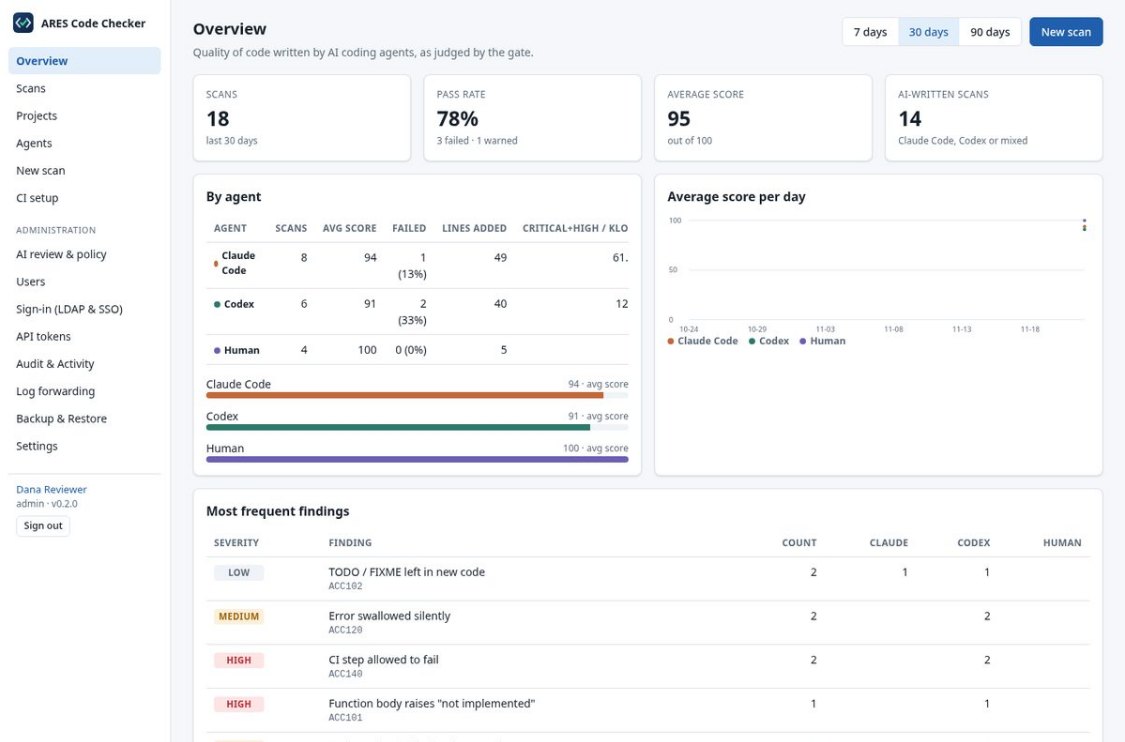
Every change is attributed to Claude Code, Codex or a person. Compare pass rate, average score and typical findings per agent over 7, 30 or 90 days.
Runs on your own servers. LDAP / Active Directory and SAML single sign-on, two-factor sign-in, scoped API tokens, an audit log with SIEM forwarding and encrypted backups.
01
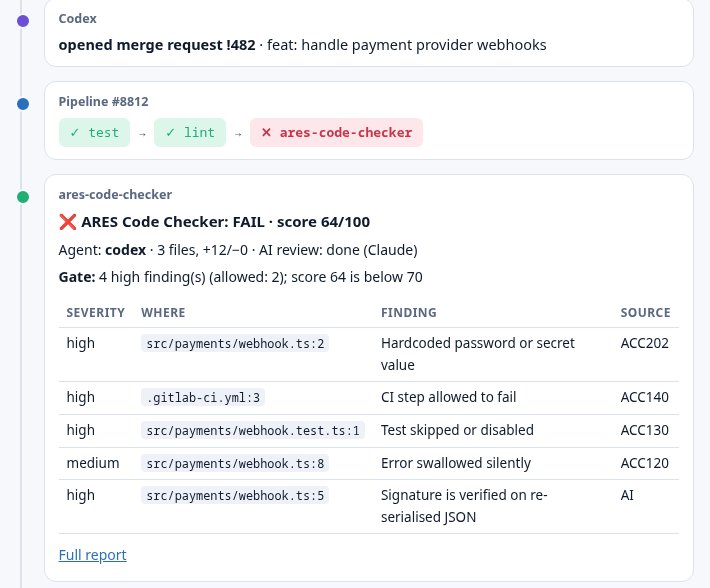
When the gate fails, the pipeline goes red and the report lists each finding with its file, line and rule. The agent fixes them, the next pipeline passes, and a person reviews a change that already passed the basics.
02
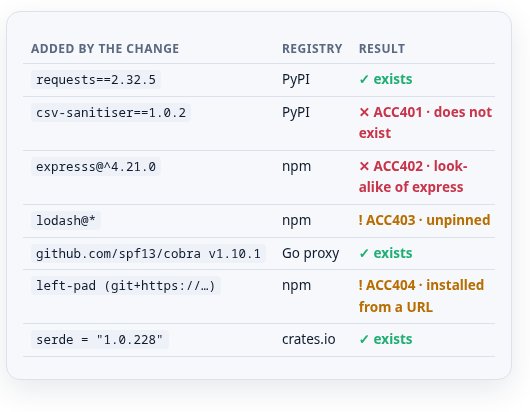
Agents invent plausible package names, and attackers register them. Every package a change adds is looked up live, so invented names, look-alikes, unpinned versions and URL installs are caught before they reach your build.
03
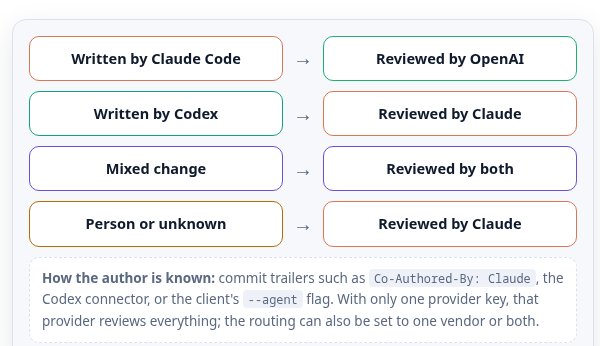
The author is known from the commit trailers. Code by Claude Code goes to OpenAI, code by Codex to Claude, and mixed changes to both. You choose whether AI review is used at all.
04
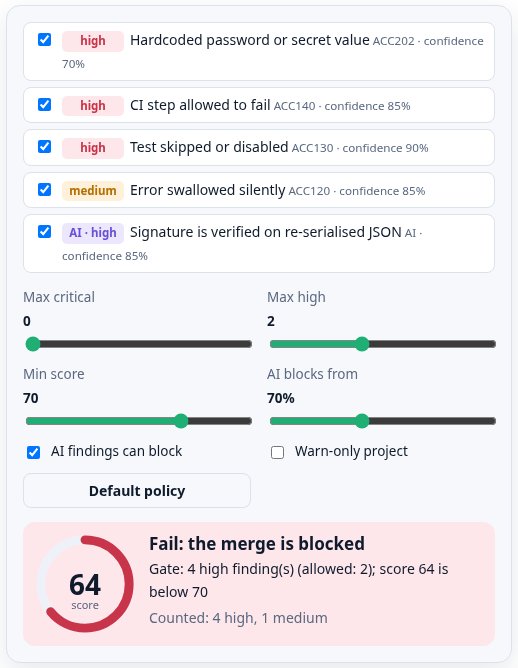
Set the limits per project and see the verdict change. Ignore rules and paths, suppress a false positive with a reason, and start in warn-only mode before you switch to enforce.
Claude Code · Codex · people · mixed changes
GitLab CI · GitHub Actions · any runner with Node.js 18+ and git
ESLint · Semgrep · CodeQL · ruff · gitleaks · any SARIF 2.1
npm · PyPI · Go module proxy · crates.io
Anthropic Claude · OpenAI · or none at all
Local accounts · LDAP / Active Directory · SAML 2.0 (Entra ID, Okta, Keycloak, ADFS)
Syslog · Splunk · Elastic · Graylog · Loki · Wazuh · Sentinel
Local disk · SFTP · S3-compatible storage, encrypted
Only if you turn the AI review on and add a provider key. You choose the providers, and lines that look like secrets are withheld. Without AI review, all the other checks still run.
It starts at 100. Each finding subtracts its severity weight (critical 25, high 10, medium 4, low 1) times its confidence; after three findings of the same rule, further ones count a quarter. The default policy fails a change with any critical finding, more than two high findings, or a score below 70.
No. It takes the predictable problems off the reviewer's plate, so people review changes that already passed the basics.
Yes. Run a project in warn-only mode and switch to enforce when the results look right.
Suppress a specific finding in a project, with a reason; it stays suppressed in later scans. Rules and paths can also be ignored per project.
The scan finishes with the rule and dependency results and marks the AI review as incomplete. It only blocks if the project's policy requires the AI review.
On your own infrastructure, as a shared server for the team, or as a desktop app for Windows, macOS and Linux. The CI job is one small script with no dependencies.
Every server you run, on one screen.
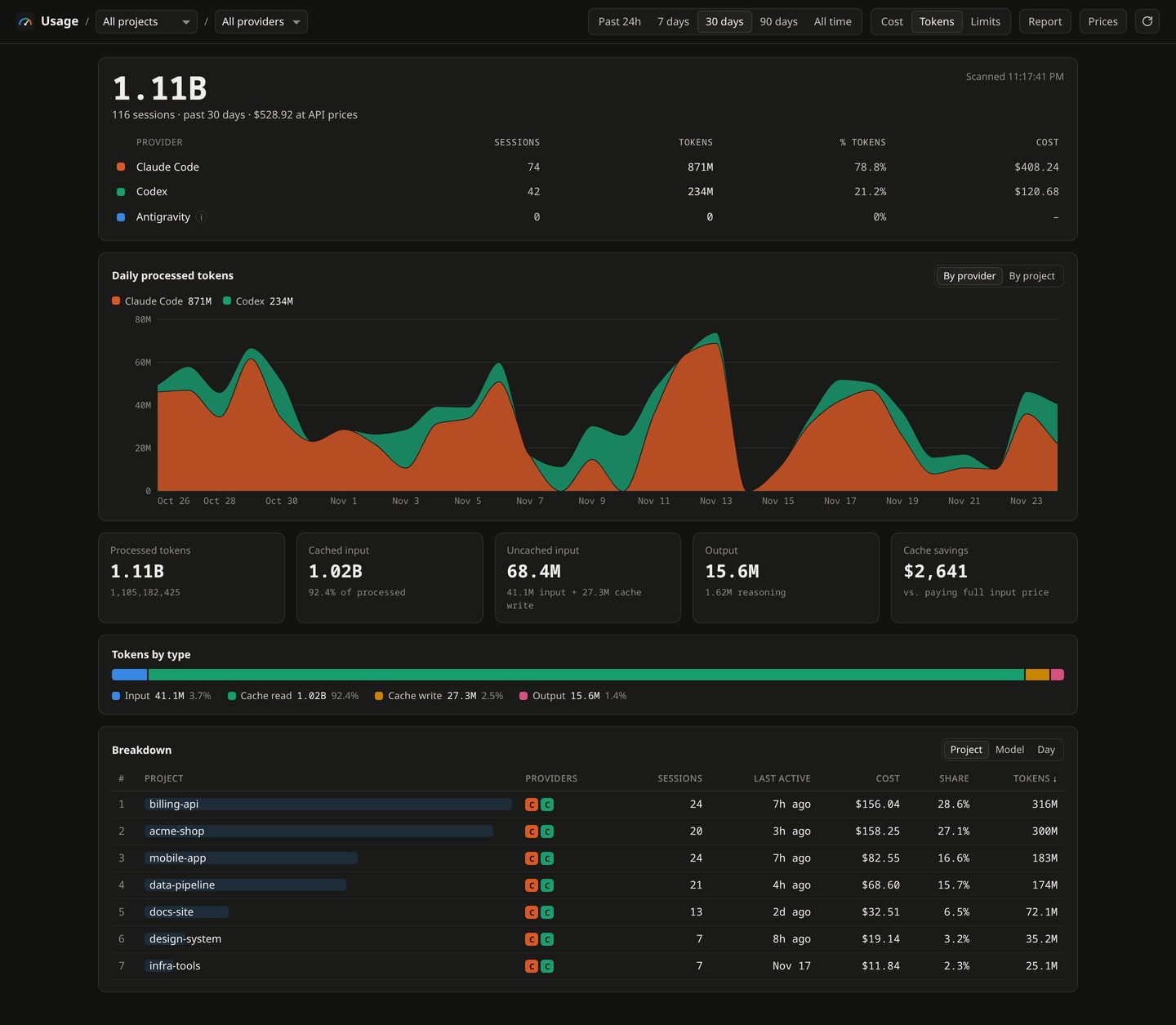
Where your AI coding agents spend their tokens.
Try the live demo on made-up code, or request a demo and we will walk you through it on your own workflow.